
Physio for POTs
Published on
13 Feb 2026
Call us on: (03) 9975 4133
Physiotherapy can play a central role in helping people with Postural Orthostatic Tachycardia Syndrome (POTS) safely rebuild capacity, improve upright tolerance, and regain confidence in daily life.
What is POTS?
POTS is a form of autonomic dysfunction where the heart rate rises excessively on standing (at least 30 beats per minute in adults, 40 beats per minute when 18 years or younger) within first 10 minutes of static standing without a corresponding drop in blood pressure, leading to symptoms such as dizziness, palpitations, fatigue, “brain fog,” and exercise intolerance. Many people also experience blood pooling in the legs, reduced stroke volume, and deconditioning, which further worsen symptoms over time
Why physiotherapy matters in POTS
Physiotherapists are able to design a graded movement programs that respect autonomic limits while targeting deconditioning and muscle weakness. Exercise-based rehabilitation is now considered a first‑line component of POTS management alongside medical and lifestyle strategies such as salt, fluids, compression, and pacing.
Key ways physio can help include:
- Structuring a safe, evidence‑based exercise program.
- Progressing positions from lying to sitting to standing.
- Coaching pacing, symptom monitoring, and flare management.
- Integrating strength, breathing, and autonomic regulation strategies into daily life.
Cardiovascular deconditioning (smaller cardiac size, low blood volume, poor fitness) is a major driver of functional limitation in POTS, and targeted exercise can reverse much of this.
Role of physiotherapy in assessment
- Take a detailed history of symptom triggers, flares, co‑conditions (e.g. hypermobility, chronic fatigue/myalgic encephalomyelitis, migraine), and current activity.
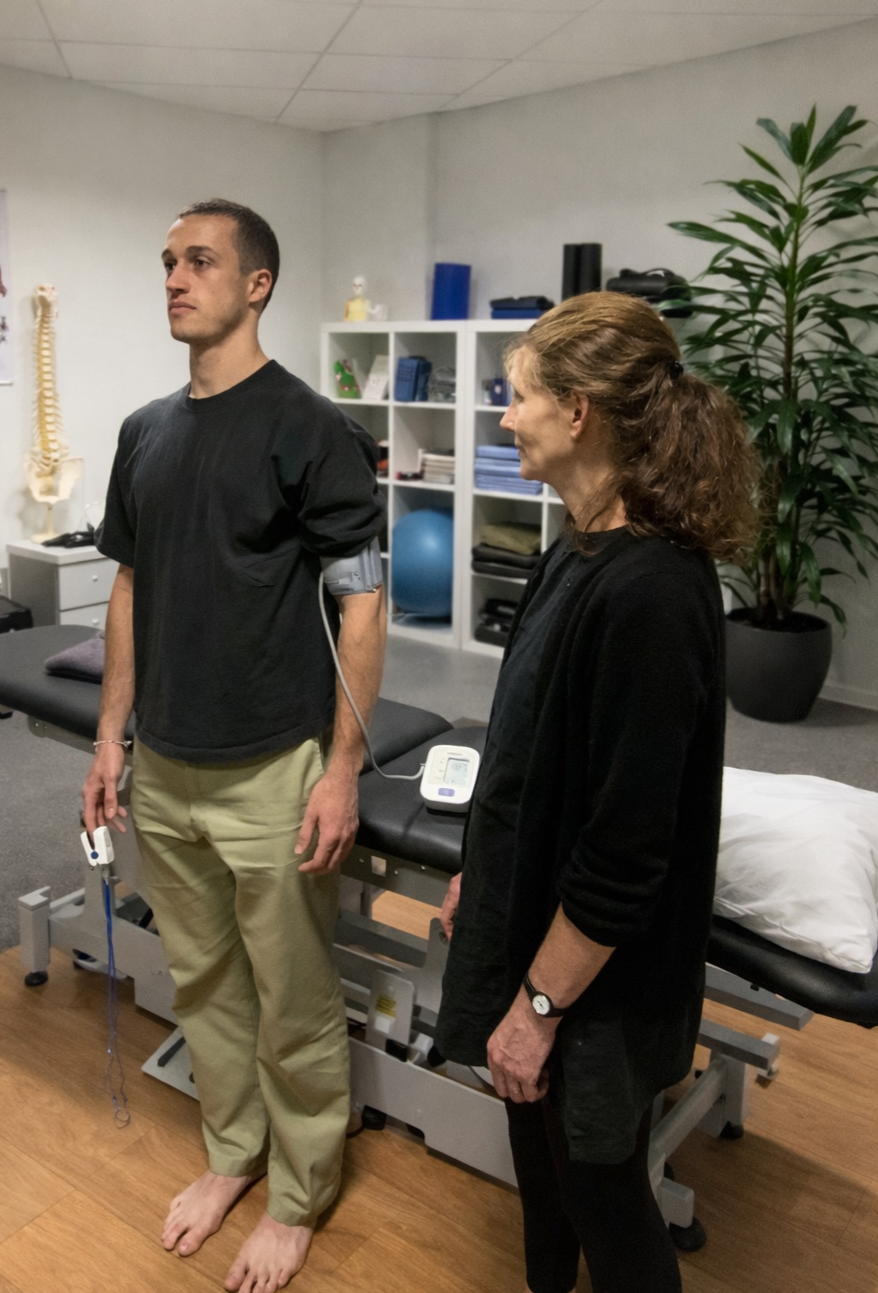
- Measure vital signs with positional changes (supine, sit, stand) and simple functional tasks to understand orthostatic tolerance in the real world (e.g. stairs, showering, carrying groceries).
- Screen strength, joint mobility, and balance, especially in the lower limbs and trunk, to tailor exercise around pain, instability, or hypermobility.
Non‑exercise tools physios may support
A physiotherapist can reinforce and integrate several non‑pharmacological strategies into rehabilitation sessions.
These may include:
- Educating on hydration and, where medically appropriate, higher salt intake to support blood volume.
- Compression garments (stockings, abdominal binders) to reduce venous pooling during exercise and daily tasks.
- Environmental and task modifications, interval‑based chores, and strategies for showers, cooking, and shopping.